

Journal→Eco-Friendly Home Materials: From Hemp and Reclaimed Wood to Mycelium and Biocement

Eco-Friendly Home Materials: From Hemp and Reclaimed Wood to Mycelium and Biocement
By Savannah Dodge · June 17, 2026 · 14 min read
Every material in your home has a story. Where it came from, what it cost the earth to produce, how it was processed and transported and installed, how long it will last, and what happens to it when it eventually leaves. Most of us never ask that question, not because we don't care, but because nobody taught us to, and because the conventional building industry has never made it easy to find the answer.
I think about this constantly. As a designer, every specification I make is a small decision about that story. The finish on a wall, the fiber content of a rug, the source of a piece of timber, none of these are neutral choices. They are votes cast, quietly and cumulatively, for a particular relationship between the built environment and the natural world it came from.
What has changed in the last decade, and accelerated dramatically in the last five years, is the range of those choices. The materials available to designers and homeowners who want to build differently have gone from a narrow and often aesthetically compromised set of alternatives to a genuinely exciting and beautiful palette that in many cases outperforms its conventional equivalents. And beyond what is available today, there is a frontier of emerging materials, grown from fungi, fermented by bacteria, produced from agricultural waste, that is redefining what a building material can even be.
This post covers both. What you can specify now, and what is coming next. Not as a catalog, but as a designer's perspective on a material conversation that I think every homeowner undertaking a renovation or new build deserves to be part of.
PART ONE: MATERIALS YOU CAN SPECIFY TODAY
01. Structure and Envelope
The structural and envelope decisions made at the beginning of any project carry the highest embodied carbon of anything in the build. They are also the decisions most likely to be made by default, by habit, by what the contractor is familiar with, by what is cheapest and fastest. This is where the gap between conventional and considered is widest, and where the potential impact of making different choices is greatest.
Hemp insulation is one of the most compelling alternatives to conventional fiberglass or foam insulation available today. Made from the woody core of the hemp plant, it is carbon negative, meaning it stores more carbon than was emitted in its production: naturally mold and pest-resistant, non-toxic, and capable of regulating humidity in a way that synthetic insulation cannot.
Hempcrete takes the same plant further. A mixture of hemp hurds and a lime binder, hempcrete is used as a non-structural insulating wall material with an extraordinary thermal mass and a carbon-negative lifecycle. It breathes, it regulates humidity, it is resistant to fire and pests, and it continues to mineralize and harden over time rather than degrading. In the Hudson Valley's variable climate, thermal performance is felt every single season.
Cross-laminated timber, or CLT, is mass timber engineering that replaces concrete and steel in structural applications. Large panels of wood laminated in alternating directions produce a material with exceptional structural performance, dramatically lower embodied carbon than concrete, and the additional benefit of storing the carbon absorbed by the trees during their growth. Mass timber buildings are carbon sinks. The same cannot be said for concrete.
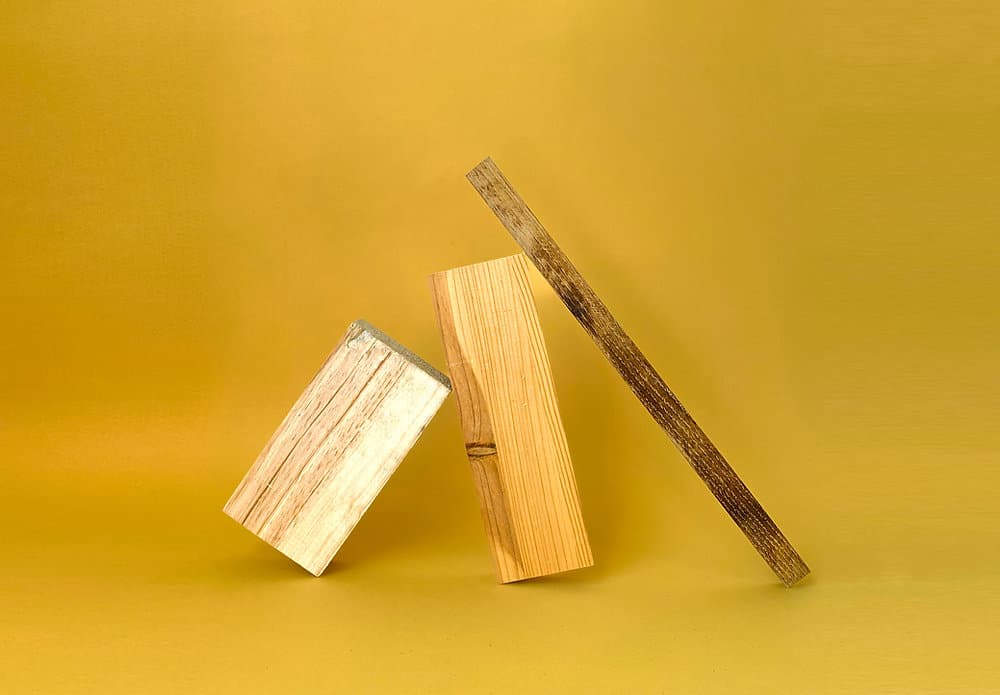
Reclaimed wood remains one of the most ecologically intelligent and aesthetically extraordinary materials available in any category. Zero new embodied carbon, because that cost was paid when the original tree was harvested, which in many cases was a century or more ago. What you receive instead is material with a density, a character, and a history that no new-growth timber can replicate. In a region like the Hudson Valley, surrounded by structures being deconstructed and salvaged, reclaimed wood is available if you just know where to look.
02. Finishes and Surfaces
This is where an interior designer's specification decisions have the most direct and concentrated impact on a project's material story. From the plaster on the walls to the tile on the floor, the cumulative effect of finish decisions across a single project is vast, and it is also the category most directly shaped by aesthetic preference, which means it is the category most likely to default to habit without someone actively asking better questions.
Lime plaster and limewash are among the oldest finish materials in the built environment, and among the most compelling. Zero VOC, fully breathable, naturally antimicrobial, and possessing a depth and luminosity that no paint can replicate. Lime reacts with CO2 in the atmosphere as it cures, actually reabsorbing carbon over time. It is also extraordinarily beautiful; the way light moves across a lime-plastered wall changes through the day in a way that feels alive.
Clay and earth plasters offer a similar quality with a warmer, more tactile result. Breathable and humidity-regulating, they create genuinely healthy indoor environments and are available through an increasing number of domestic suppliers. In colors drawn directly from the earth, ochres, siennas, and warm greys, they produce palettes that feel specific to place in a way that manufactured finishes never quite achieve.
Natural linoleum is one of the most misunderstood materials in residential design, almost universally confused with vinyl. Although it is categorically different. Made from linseed oil, cork dust, wood flour, and natural pigments on a jute backing, natural linoleum is fully biodegradable, naturally antimicrobial, and available in a range of colors and patterns that have expanded dramatically in recent years. It is also exceptionally durable, and properly maintained, it outlasts most flooring alternatives.
Recycled glass tile is made from post-consumer glass, bottles, windows, industrial cullet, melted and reformed into tile with a translucency and depth that new glass tile cannot match. It is fully recyclable at the end of life and available in colors that range from subdued and mineral to genuinely extraordinary. In a kitchen or bathroom, it is one of the most visually compelling sustainable specifications available at any budget level.
Terrazzo with recycled aggregate updates one of the most ancient flooring materials with a contemporary ecological logic. The aggregate, traditionally marble chips, can be replaced entirely with reclaimed stone, recycled glass, or industrial byproduct, producing a surface that is both visually specific and materially honest. Poured in place, it is seamless, enduring, and improves with age.
03. Textiles and Soft Goods
The fiber content of a rug, a curtain, or an upholstered piece is a health and ecological decision as much as an aesthetic one, and it is rarely discussed that way. Conventional synthetic textiles, polyester, nylon, and acrylic are derived from petroleum, shed microplastics with every wash and every footstep, and do not biodegrade at the end of life. The natural alternatives are not a sacrifice. They are categorically superior in almost every dimension that matters.
Wool is thermoregulating, naturally flame-resistant without chemical treatment, biodegradable, and carbon-storing. A wool rug in a well-used room lasts decades. It handles humidity, resists soiling, and develops a patina that synthetic alternatives never achieve. For upholstery, drapery, and floor coverings, it is my default specification when budget allows.
Linen has one of the lowest water and pesticide footprints of any textile crop. It is made from the flax plant, which requires minimal irrigation and no synthetic inputs, and it produces a fiber that is exceptionally strong, naturally antibacterial, and possesses a texture that gets better with every wash and every year of use. For drapery, particularly, linen is irreplaceable in the way that it filters light.
Hemp textiles are stronger than cotton, require minimal water and no pesticides, and are increasingly available in upholstery and drapery grades that are genuinely beautiful. Hemp has been cultivated for fiber for thousands of years and was largely abandoned in the twentieth century for regulatory rather than performance reasons. Its return to the textile market is one of the more straightforward sustainable material stories, a crop that asks little and gives a great deal.
Recycled content upholstery, fabrics produced from post-consumer PET bottles, and reclaimed fishing nets have reached a level of quality in the last five years that makes it genuinely competitive with virgin synthetic alternatives on performance and with natural fibers on price. For clients who need a durable, cleanable upholstery for high-use applications, it is an increasingly strong specification.
04. Furniture and Millwork
The furniture and millwork decisions in a project are where the principle of longevity has the most direct ecological application. A custom millwork piece built from reclaimed timber, designed and constructed to last the life of the building, has an almost immeasurably better ecological profile than a mass-produced alternative that will be renovated out in a decade. This is not a minor distinction. The most sustainable material decision available in any project is simply to build things that last.
Bamboo is one of the fastest-growing plants on earth. With some species growing a meter a day, and when properly processed, produces a material harder than most hardwoods. For flooring, millwork, and furniture, it is a genuinely high-performance alternative with a fraction of the growth cycle of the timber it replaces. The caveat is processing: bamboo products vary enormously in quality and in the adhesives used in their manufacture. Specify carefully and source from suppliers with documented low-VOC processing.
Reclaimed timber millwork sourced from demolished structures, salvage yards, and deconstructed barns carries a material quality that no new timber can replicate. The density of old-growth wood, the character of a century of use, the specificity of a material with a provenance and a past. In the Hudson Valley, surrounded by agricultural structures being carefully deconstructed, reclaimed timber is one of the most locally available and most compelling materials a project can incorporate.
Recycled aluminum produces approximately 95% less carbon than virgin aluminum in its manufacture. For hardware, fixtures, furniture frames, and architectural metalwork, it performs identically to its virgin equivalent and carries a dramatically different embodied carbon story. It is also increasingly indistinguishable in finish quality from new material.
PART TWO: MATERIALS WORTH WATCHING
The materials in this section are not yet available for standard residential specification. Some are in limited commercial production. Some are in active architectural testing. Some are still in the laboratory. I am including them not as a spec list but as a horizon because understanding where material science is going changes how you think about what is possible.
These are materials that do not extract from natural systems. They grow within them, or are produced by them, or are made from what those systems discard.
05. Grown Materials: Mycelium and Bio-based
Mycelium composites are produced by growing fungal root structures [mycelium] through agricultural waste substrate in custom molds. The result is a material that can be formed into panels, blocks, acoustic tiles, and surface finishes. It is fully biodegradable, fire resistant, and possesses a warmth and texture that feels organic because it is.
Bolt Threads is producing mycelium leather, a genuine animal leather alternative grown rather than raised, and Ecovative has been developing mycelium foam and panel products for architectural applications for over a decade. The aesthetic potential is significant and largely unexplored.
Algae-based panels and insulation are produced from algae grown in bioreactors, closed systems that consume CO2 rather than emitting it during production. The resulting material can be formed into rigid insulation board and acoustic panels that are carbon negative from production through the end of life. Several European manufacturers are in active development and limited production.
Bacterial cellulose is produced by bacteria in a fermentation process that generates a material similar in structure to leather or paper, depending on how it is processed. It can be grown in sheets, in custom shapes, in almost any dimension.
Seaweed plaster is a coastal material being developed by several research groups as a breathable, humidity-regulating interior finish. Seaweed is one of the fastest-growing organisms on earth, requires no freshwater or fertilizer to cultivate, and produces a fiber with natural antimicrobial and moisture-managing properties.
06. Agricultural Waste Byproducts
Straw board panels are made from compressed agricultural straw waste, the stalks left after grain harvest, formed under heat and pressure into structural and finish panels with no added formaldehyde and excellent insulation value. They have been used in sustainable construction for decades and are considerably more available than most of the materials in this section. The barrier has been aesthetic rather than technical, and that is changing as the panels become available in finer finishes and broader dimensions.
Coconut husk composites are produced from coir fiber, the fibrous material between the outer husk and the shell of a coconut, compressed into board products for flooring and furniture applications. Coir is a byproduct of coconut processing that would otherwise be discarded. The resulting material is durable, naturally resistant to moisture and insects, and possesses a warmth and texture that is specific and beautiful.
Sunflower stalk and corn husk panels are among the more surprising entries in the agricultural waste category. Researchers and manufacturers in Europe and Asia have been developing acoustic and finish panels from these crop residues, materials that are harvested annually, require no additional cultivation, and produce a panel product with excellent acoustic properties and a distinctive aesthetic.
07. The Frontier: Bio-plastics, Living Materials, and Beyond
PHA bioplastics are produced by bacteria fermenting plant sugars, a biological process that generates a plastic-like polymer that is fully biodegradable in marine and soil environments. Unlike conventional bioplastics, which often require industrial composting conditions to break down, PHAs degrade in natural environments without leaving microplastic residue. They are beginning to appear in furniture components, hardware, and product design applications and represent one of the most promising replacements for conventional petroleum-based plastics in interior specification.
Snail mucus bio-resin is exactly what it sounds like, and it is a genuine frontier material. Researchers are developing structural resins from gastropod secretions that are stronger than conventional epoxy, fully biodegradable, and produced without the toxic precursors that make conventional resin manufacture environmentally problematic.
Chitin-based materials are derived from the shells of crustaceans and insects, chitin being the structural polymer that gives them rigidity. Processed into films, panels, and fiber, chitin produces materials that are strong, biodegradable, and produced from what is currently a waste stream of the seafood industry.
Carbon-sequestering concrete is perhaps the most immediately significant material on this frontier list, given concrete's role as one of the largest single sources of embodied carbon in the built environment. Several formulations are now in commercial testing that absorb CO2 during curing, effectively using the hardening process to mineralize atmospheric carbon rather than emit it. The potential impact at scale is enormous.
Biocement is produced by bacteria that mineralize calcium carbonate, the same process by which shells and coral form, without firing, without high-energy processing, without the carbon cost of conventional cement production. It can be grown into structural forms in custom molds, produced at ambient temperature, and formulated to biodegrade at the end of life.
Living moss walls deserve a different kind of mention than the other materials in this section, because they are available now and are already being specified, but almost always as decoration rather than for their functional properties. Certain moss species actively filter airborne particulates and regulate humidity without soil or irrigation, surviving on ambient moisture and light. Designed as genuine air quality infrastructure rather than a visual feature, a living moss installation is a material that works for the building as long as the building stands.
What All of This Means
The conventional building material palette, concrete, steel, vinyl, synthetic foam, and petroleum-derived textiles, was assembled over the twentieth century on the basis of performance and cost, with no accounting for ecological consequence. That accounting is now being done, retroactively and urgently, and what it reveals is that the most ecologically honest materials available are also, almost without exception, among the most beautiful.
Lime plaster that breathes and mineralizes over decades. Reclaimed timber with a century of use already written into its grain. Wool that thermoregulates, biodegrades, and gets more beautiful with age. Mycelium grown in a mold into a panel that will return to the earth when the building no longer needs it. These are not compromise materials. They are what happens when design takes the full story of a material seriously, from origin to end of life, and finds that beauty and ecological integrity, pursued with genuine intention, consistently arrive at the same place.
This is the material conversation I bring to every project at Curio. Not a checklist of sustainable swaps, but a genuine interrogation of what a home is made of and what that means for the people inside it, the land it sits on, and the world it came from.
If you are planning a project and want to think carefully about what it is made of, I would love to be part of that conversation.
Love, Sav
Let's Chat

From the Studio
Savannah Dodge
Savannah Dodge is the Chief Executive Officer and Principal Designer of Curio Studio. She earned her BFA in Interior Design from the New England School of Art & Design at Suffolk University and brings over a decade of experience designing thoughtful, layered homes.
More about the studioMore from the journal
May 27, 2026
Embodied Carbon vs. Operational Carbon: What Every Homeowner Should Know Before They Build
When most people think about the environmental impact of their home, they think about energy bills. The electricity it c…
Read →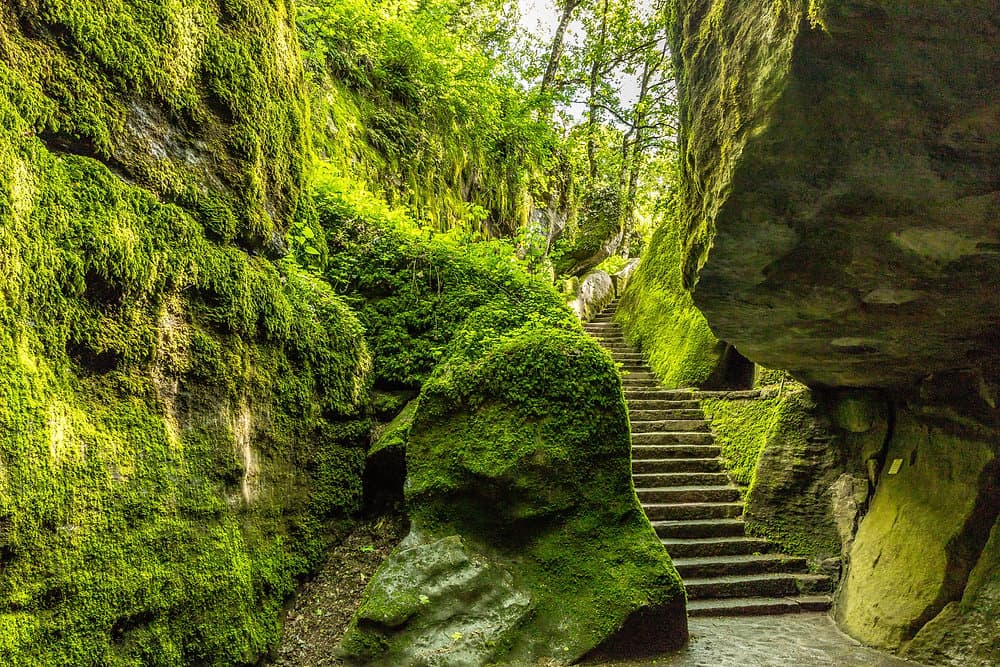
April 22, 2026
How to Design a More Sustainable and Regenerative Home
Most conversations about interior design start and end at the surface: the finishes, the furniture, the palette. And tho…
Read →
March 25, 2026
Fighting Destruction with Creation
It can sometimes feel as though the world is caught in an endless cycle of destruction. War. Division. Environmental deg…
Read →