

Journal→Why the Hudson Valley Is One of the Most Interesting Places to Design Right Now
Why the Hudson Valley Is One of the Most Interesting Places to Design Right Now
By Savannah Dodge · June 3, 2026 · 9 min read
I grew up in the Berkshires. Living in a particular way that shapes how you see the landscape for the rest of your life. The specific grey of a western Massachusetts winter. The way the hills hold light in October against the fall foliage that makes your jaw drop, and your eyes twinkle. The old farmhouses and barns that have been standing longer than anyone can remember, the particular texture of a region that has always attracted people who wanted something quieter and more serious than what the city was offering.
I did not realize until I left how much of a design education that was.
When I came to the Hudson Valley, something clicked into place that I did not have language for at first. The light was different but familiar. The bones of the houses spoke a similar architectural dialect, the same relationship to land, the same materiality, the same evidence of generations of people who had lived seriously within these landscapes and built accordingly. The Berkshires and the Hudson Valley are in many ways in conversation with each other.
I landed in the Hudson Valley because this place felt like an extension of the language I already knew and because it asked something of me that I wanted to be asked. A kind of attention to history, landscape, and the specific conditions of a place that encourages me to be a better designer. The more time I am here, designing homes and living alongside its landscape, the more convinced I am that the Hudson Valley is one of the most genuinely compelling places to be doing this work right now.
That is not a local bias talking. It is an observation about a specific cultural and architectural moment unfolding in real time in this valley, producing some of the most interesting residential design happening anywhere in the Northeast. Understanding why requires understanding what makes this place unusual and what it asks of the designers and homeowners working within it.
The Architecture
Before a single design decision is made, the Hudson Valley hands you something remarkable to work with. Historic farmhouses that have been standing for two hundred years. Dutch colonials with proportions that no contemporary builder would have the patience or the knowledge to replicate. Victorians with details that reveal themselves slowly over time. Converted barns, stone cottages, mid-century moderns tucked into hillsides with views that were clearly the focal point. And layered beneath all of it, the evidence of every generation that lived here before, additions made in different centuries, materials sourced from the immediate landscape, rooms repurposed and reimagined across decades of changing family life.
These buildings are not blank canvases. They are documents. They carry a specific architectural literacy, an understanding of proportion, materiality, and historical context, that rewards the designer who can read them and exposes the one who cannot. Working within a structure that has been standing since 1780 requires a different kind of attention than designing a new build. You are in conversation with everyone who has lived there before you, and the conversation requires both respect for what exists and genuine ambition about what it could become.
This is the tension that produces the most interesting design in the region. Not preservation for its own sake, not renovation that erases what came before, but interpretation, the careful, considered act of bringing a historic structure into a contemporary life without losing what made it worth saving.
The Landscape
No interior designer working in the Hudson Valley gets to ignore the landscape. It is too present, too dominant, too specific in its demands to be treated as a backdrop.
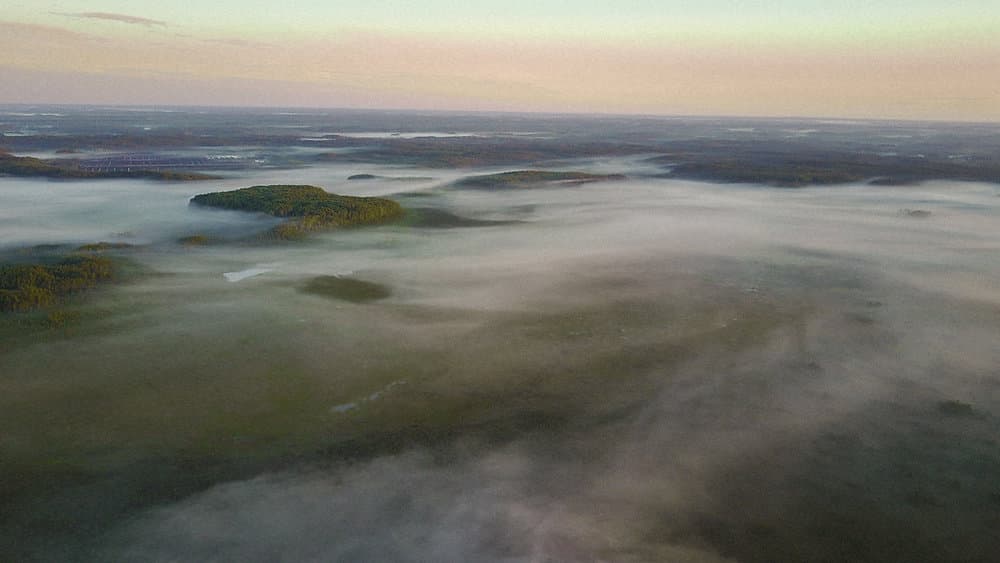
The light here is unique. Changing by season in ways that are dramatic enough to alter the entire character of a room, the flat grey of a February afternoon, the particular gold of late October, the extraordinary clarity of a summer morning when the mist is still on the river. A palette that works in one season can feel completely wrong in another if it hasn't been thought through in relation to how the light moves through the space across the full year.
The relationship between inside and outside is non-negotiable. The Catskills on one horizon, the Hudson River on another, farmland and forest in every direction, the landscape is so visually dominant that any interior ignoring it is already working against itself. The best homes here don't compete with the view. They frame it, extend toward it, and use it as the primary design element it already is. Windows placed with intention. Rooms oriented to the landscape rather than away from it. Materials that belong to the place: wood, stone, and leather. That feels continuous with the world outside rather than imported from somewhere else entirely.
The land tells you what the house needs to be. Most of the work is learning to listen.
The Culture
The Hudson Valley has always had a creative community. Artists, writers, makers, farmers with strong roots and points of view. But over the course of the last decade, the region reached a kind of critical mass that changed the design conversation in a tangible way.
Part of it was the pandemic-era migration. The wave of buyers arriving from New York City brought a different relationship to what a home is for, not a place to sleep between weeks of commuting, but a primary environment, the center of a life. That shift in how people were using their homes, combined with the financial means to invest in them seriously, raised the stakes of residential design in this region.
At the same time, the existing creative community set a standard of taste that the incoming wave had to reckon with. This is not a place that is easily impressed by surface-level design. The artists, the architects, the makers who have been here for years built a visual culture with genuine depth, and it shows in what clients here expect and respond to. The collision of those two forces, the rooted creative community and the newly arrived urban sophistication, is producing an interesting tension in residential design. Between rural and urban. Between restraint and ambition. Between belonging to this place and bringing something new to it. The best projects here are the ones navigating that tension intentionally with care and empathy.
Preservation and Innovation
The most compelling projects I encounter in this region, the barn conversions, the church reimagined, the farmhouses being brought into contemporary life, are not renovation projects in the conventional sense. They are acts of interpretation, and they are among the most creatively demanding works a designer can take on.
Preservation requires a particular discipline. It asks you to understand what a building was doing before you arrived, why it was built the way it was, and what it has accumulated in the way of meaning and material over its lifetime. It asks you to distinguish between what is worth keeping because it is genuinely beautiful or historically significant, and what is worth keeping simply because it is old. Those are not the same thing, and conflating them produces timid design that serves neither the history nor the present.
Innovation within a historic structure requires an equal and opposite discipline. The confidence to make contemporary decisions without apology, to introduce materials and details that belong to this moment rather than to the building's past, to let the contrast between old and new be a source of energy rather than a problem to be smoothed over. The best barn conversions I have seen don't pretend the barn was always a house. They make the barn more itself, more legible, more alive, by being honest about what it has become.
That is a high standard.
Thinking Ecologically
The Hudson Valley has a long relationship with land stewardship. The environmental consciousness here is not a trend or a marketing position; it is embedded in the culture of the place, in the farming traditions, in the arts community, in the relationship this region has always had with the river and the mountains, and the particular quality of the land. Clients here are more likely than almost anywhere else to care about where their materials come from, how long they will last, and what their home's relationship to the landscape actually is, rather than just appears to be.
That is not a constraint on the design. It is the most interesting brief you can receive.
Designing with ecological intelligence in the Hudson Valley means taking the landscape seriously as a collaborator. It means specifying materials that belong to this place: stone from nearby quarries, wood from regional mills, reclaimed elements from structures that came before. It means thinking about how a building performs in relation to its site: where the sun enters, how the air moves, what the house gives back to the land it sits on. It means understanding that the most beautiful version of a home in this region is almost always also the most ecologically honest one, because beauty here is inseparable from belonging.
This is what I mean when I talk about connecting people, place, and planet. It is not an abstraction. It is a design methodology, and the Hudson Valley is one of the few places where clients arrive already understanding why it matters.
Why I Am Here
I chose this region to build a practice because it asked something of me that I wanted to be asked. It demanded a kind of attention, to history, to landscape, to the specific conditions of this place and the people who have chosen to live within it, that pushes me to be a better designer. It offers projects with genuine complexity and clients with genuine investment in getting it right. It surrounded me with a creative community whose standard of taste and craft raised my own.
The Hudson Valley is not a backdrop. It is a collaborator. The most interesting design happening here right now is the work that understands that, that takes the history, the landscape, the light, and the cultural moment seriously as design inputs rather than incidental features. That holds the past and the present in the same hand without dropping either one.
That is the standard this place sets. And it is a genuinely remarkable one to be working within.
If you are designing or renovating a home in the Hudson Valley and want to work with someone who takes this place as seriously as you do, I would love to connect.
Love, Sav
Let's Chat
From the Studio
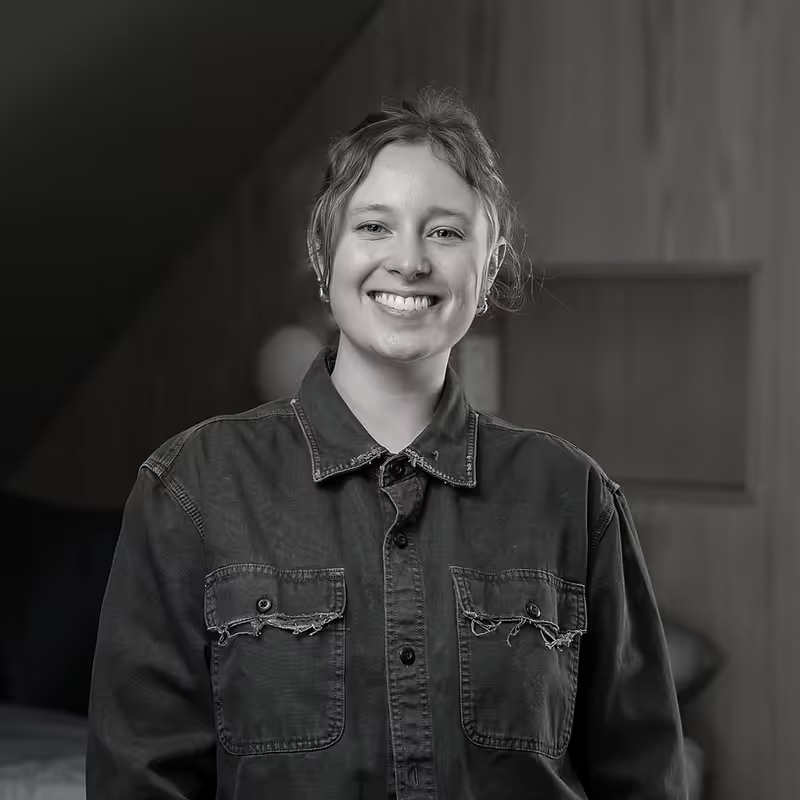
Savannah Dodge
Savannah Dodge is the Chief Executive Officer and Principal Designer of Curio Studio. She earned her BFA in Interior Design from the New England School of Art & Design at Suffolk University and brings over a decade of experience designing thoughtful, layered homes.
More about the studioMore from the journal
March 18, 2026
Designing With Nature: Spring in the Hudson Valley
In the Hudson Valley and throughout New York City, spring does not arrive quietly. It pushes. Snow melts into heavy eart…
Read →
October 2, 2026
What the First Conversation With Curio Actually Looks Like
Wondering what happens when you reach out to Curio Studio? A Hudson Valley interior designer walks through the full inqu…
Read →
September 24, 2026
What Vermont Does to You
A Hudson Valley interior designer spends her birthday in southern Vermont near Mount Snow and reflects on what Vermont's…
Read →