

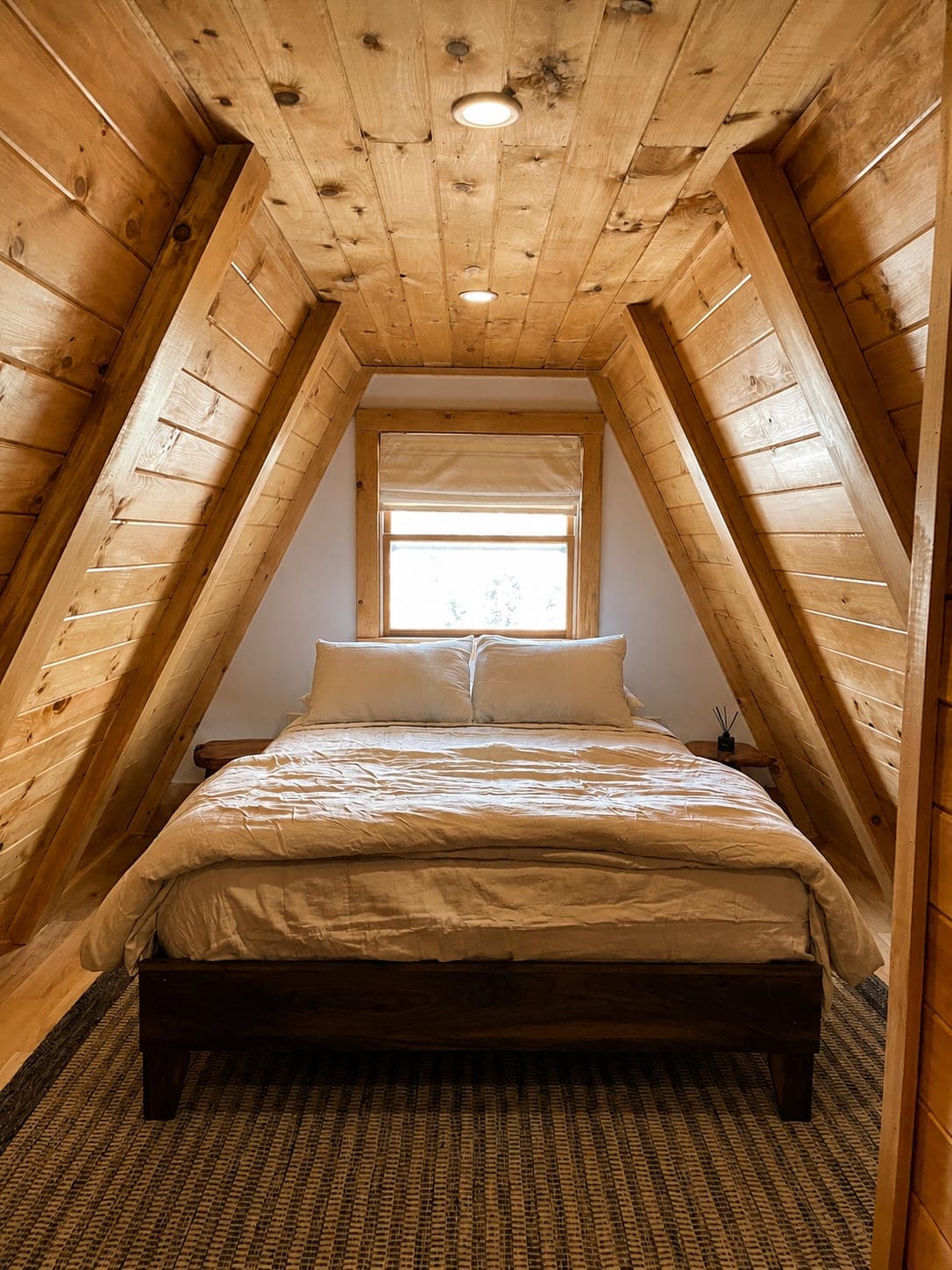
Full Service · Vermont · 2024
Vermont A-Frame
A weekend house that had been holding its breath.
View project →Interior Design in Saratoga Springs
Historic character. Contemporary living.
Curio Studio Interiors is a full-service residential interior design studio serving Saratoga Springs, Ballston Spa, and the towns around them: Wilton, Malta, Greenfield Center, Stillwater. Based in Kerhonkson, NY, we work on historic Queen Anne and Italianate renovations, primary residences, and new construction along the city's edges, on a senior-led, full-fee retainer scaled to the home.
Saratoga Springs has a particular tension that makes it interesting to design in: the grand Victorian architecture of its historic core, the contemporary ambitions of its newer residents, and the particular energy of a city that knows how to celebrate. Homes here range from century-old Queen Annes in need of sensitive renovation to new construction on the city's edges. The design challenge is almost always the same: how do you honor what's there without being imprisoned by it? How do you make something feel current without making it feel imported?
The light in Saratoga is theatrical, and the houses know it. Broadway in late August carries a flat, golden afternoon light that the Queen Annes were originally proportioned for: tall sash windows, bay projections, deep porches that throw a particular afternoon shadow onto a parlor floor. February reads differently. The same rooms go silver and honest under a winter sky off the Hudson and the Adirondack foothills, and the materials have to answer to both. We pay attention to how a lime-wash plaster reads against a stained-glass transom at six on a July evening and again at eight on a January morning. White oak deepens against snow. Wool holds a room in the cold months and breathes through the racing season. Materiality, here, is a response to a city that was built to be seen.
What we know about Saratoga homes is that they were built by a particular kind of optimism and they ask us to honor it without becoming nostalgic about it. The Queen Annes and Italianates of the historic core carry proportional logic (fourteen-foot parlor ceilings, casework that was meant to be plastered into, picture rails, transoms) that rewards restraint and punishes the wrong fixture height. Second Empire mansards through the West Side and Franklin Square neighborhoods have their own grammar. Stick-style and Shingle-style cottages from the racing-era expansion settle in their own way. Early-twentieth-century estates north toward Wilton and Greenfield Center have generous footprints and modest interiors that have been asked, for a hundred years, to do more than they were originally drawn for. Contemporary new construction along the eastern and southern edges of the city faces a different question: how do you sit a current house inside a city this proud of its grammar without arriving as a tourist.
We work the city and its surround as one region. Saratoga Springs itself: Broadway, the East Side, the West Side, the historic core. Ballston Spa to the south, where the Federal and Greek Revival stock is older and quieter than the racing-era houses up the hill. Wilton, Malta, and Stillwater along the corridor down toward the Capital Region. Greenfield Center, Galway, and Charlton out into Saratoga County's quieter agricultural edges. The city sits at the seam of the Adirondack foothills, the Hudson, and the Capital Region, and the homes carry traces of all three. We treat each project on the terms of the particular house, not the city's brand.
Our trade network reaches Saratoga through the same regional, craft-first relationships we hold across the Hudson Valley and the Capital Region, and through years of specific work on historic envelopes. The plasterers who know how a hundred-and-thirty-year-old lath wall actually behaves under lime wash. The millworkers in Saratoga and Washington counties who will redraw a Victorian casing detail with you over coffee rather than guess from a stock catalog. The masons who read a Saratoga County bluestone seam from an out-of-state lookalike. Period restoration, when the house earns it, is a craft conversation, not a kit-of-parts. We plan sourcing and sequencing against the actual condition of the envelope, not against an idealized one.
Projects in Saratoga Springs and the surrounding Capital-Saratoga region include historic renovations, primary residences, and investment properties.
How a project unfolds
Kerhonkson to Saratoga Springs is roughly two and a half hours each way. We plan site visits with intention: a real day on the property rather than a quick stop, often combined with Capital Region work on the same trip. The scope that makes sense here is broader than a single room: full historic renovations, whole-home design, new construction interiors along the city's edges, and investment properties that ask for a coherent point of view applied throughout. Saratoga houses tend to want the whole conversation.
Every project begins with a slow walk through the house in the light it actually lives in: a Broadway parlor at six on a July evening, a Franklin Square kitchen at dusk in November, a front hall during track week and again during mud season. We meet the architect and contractor early, often before drawings are final, because historic Saratoga envelopes reward early coordination and punish late surprises. Specifications layer in: envelope, plaster, structure, materiality, light, and then the moveable life of the rooms. Period restoration runs in parallel with contemporary intervention where the house asks for both. Decisions land in writing. The pace is the work.
A Queen Anne on the East Side, brought back to its proportions: original plaster restored rather than replaced, a quiet contemporary kitchen built behind the historic envelope, lime-washed walls that read differently against the November light off the Adirondack foothills. A new-construction primary residence at the city's edge, designed to feel rooted in Saratoga without performing Victorian: a quieter palette, real materials, generous proportions that answer to the historic core a few miles away rather than imitate it. Both took longer than the clients first imagined. Both came out, in their words, like the house they had always meant to be.
Common questions
Curio prices its Saratoga work the same way it prices everywhere else: transparently, scoped to the home. Full Service is custom-scoped: the design fee is set in the written proposal once we understand the home and the work it asks for, with furnishings, construction, and specialty trades budgeted separately. For industry context, the ASID 2024 Compensation & Benefits Report (https://www.asid.org/resources/research) places median residential designer billing at $150 per hour nationally. Saratoga work tracks at or slightly above that, because the historic Victorian and Italianate stock carries real plaster, millwork, and trade-coordination weight. We price in writing, in a defined scope, before any work begins.
A full historic renovation in Saratoga typically runs nine to eighteen months from first conversation to install, sometimes longer for a Queen Anne or Italianate that needs real structural, plaster, and trade coordination. New construction interiors at the city's edge track the architect and builder schedule, usually twelve to twenty-four months because we engage at design development and stay through punch list. We are honest about timing from the first call. Nothing rushed in a hundred-and-thirty-year-old house ages well.
Yes, and we prefer it. The strongest Saratoga projects come out of a real conversation between architect, builder, plaster crew, and designer from the earliest sketch. We coordinate early, share drawings openly, and work to keep the design intent intact through the build. If you do not yet have an architect or contractor, we can point you toward regional partners we trust on historic envelopes.
Mostly primary residences in Saratoga, with a meaningful share of seasonal homes around track season and the racing calendar. Primary residences here carry the whole rhythm of a year: real winters, real daily life inside a historic envelope. Seasonal houses get used in concentrated bursts and have to recover quickly. The architectural respect is the same. The textile and storage logic shifts. We design for how the house is actually lived in, not the brochure version.
There is no single Saratoga style. The houses that age well respond to the specifics of the site: the orientation, the light, the architectural bones, the climate. A Queen Anne on the East Side wants a vocabulary that respects its proportions. A new build at the city's edge wants something quieter and more honest about its lines. The work is to find what the particular house wants to become, not to apply a regional costume, and certainly not to apply a generic Victorian one.
By treating the house as one continuous conversation rather than two competing ones. The honest move is not to gut the historic bones and not to embalm them either. We restore what the house wants restored (plaster, proportion, casework, the rooms that carry the original logic), and we intervene where contemporary life genuinely asks for it: kitchens, bathrooms, the way a family actually moves through the public rooms. The result is a house that reads as itself, in its own century and ours, without performing either one. The Queen Anne is not the enemy of the way you live now.
Both, and the conversation is always about what the particular house asks for. Some Saratoga projects want true restoration: original plaster repaired rather than replaced, period casework redrawn from physical evidence, lime wash on horsehair plaster done correctly. Others want a sympathetic interior inside a historic envelope, where the bones are honored and the rooms speak in a contemporary voice. We work on both, and we are honest with clients about which the house is asking for. The wrong move is to over-restore a house that wants to breathe, or to over-modernize one that does not.
How We Work
You're not managing this — we are. From first concept to final installation: every vendor conversation, every site visit, every decision that needs making. You show up for the moments that matter. We carry the rest.
The full design plan, in your hands — every finish, every fixture, every spec, drawn clearly enough that your contractor can build it without us in the room. You handle the ordering. We handle the thinking.
Our Work
Full Service · Vermont · 2024
A weekend house that had been holding its breath.
View project →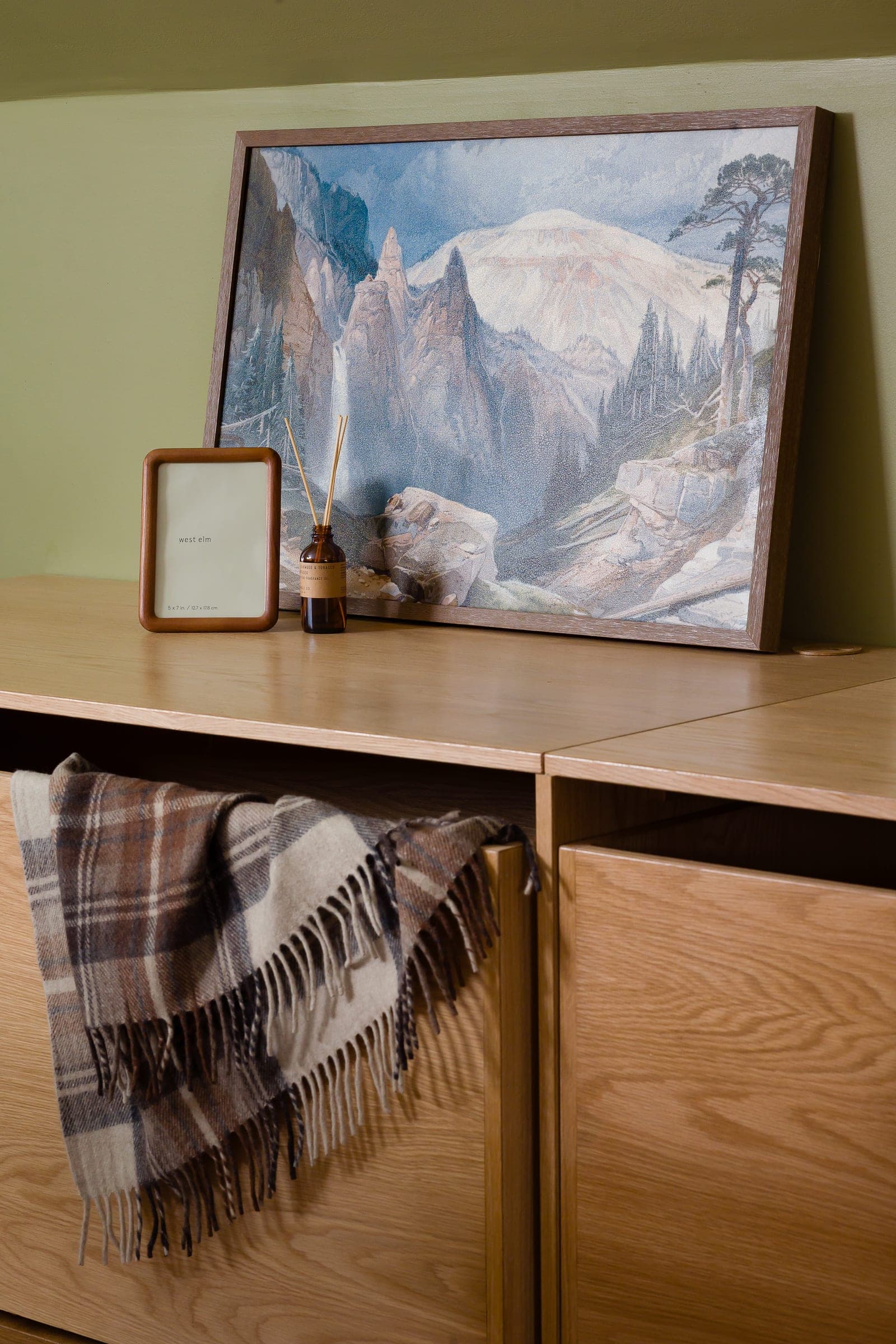
Full Service · Berkshires, NY · 2024
A room that finally understood what children actually need.
View project →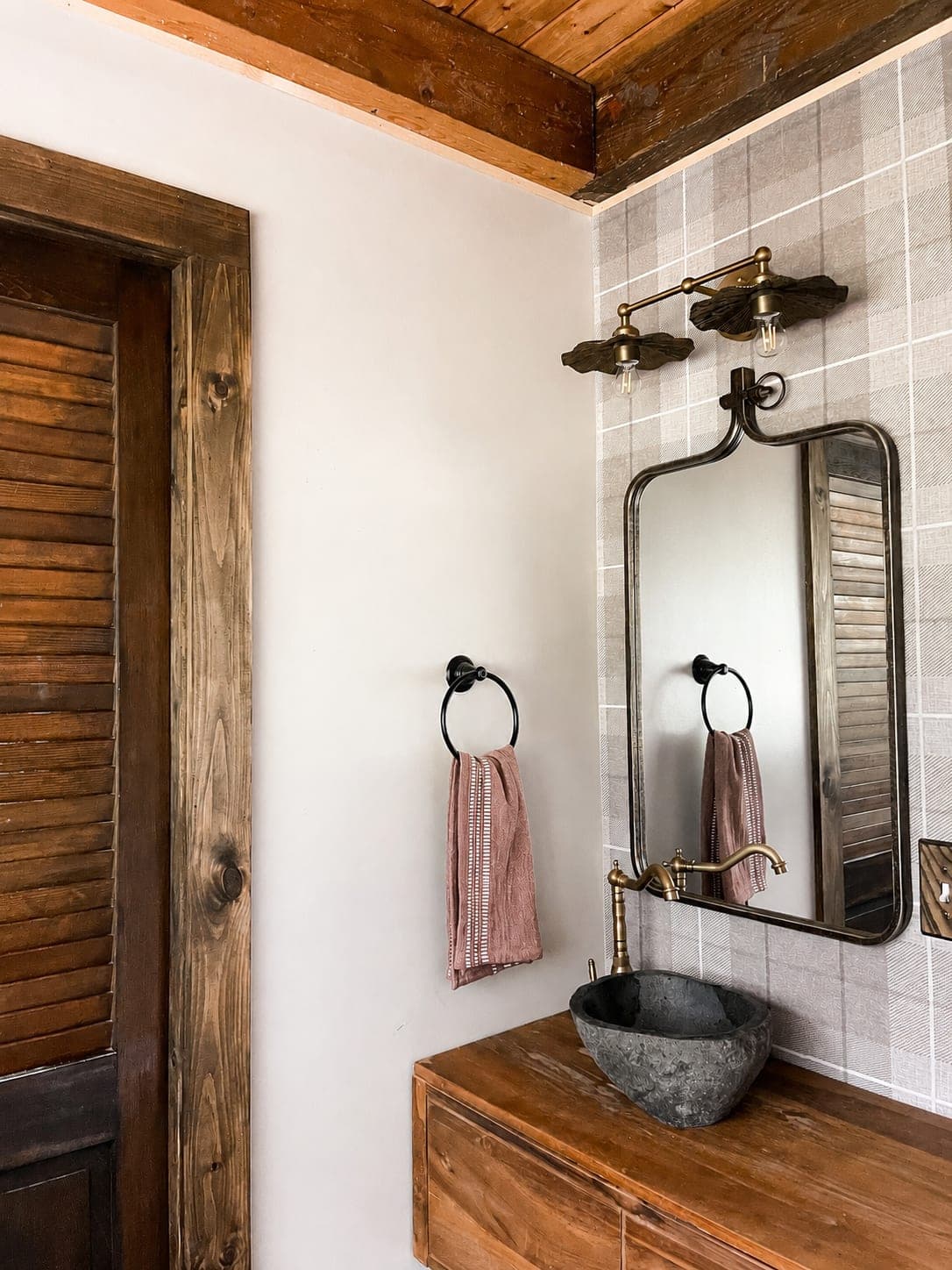
Full Service · Berkshires, MA · 2023
Small square footage. Very large personality.
View project →Meet your designer
Saratoga is its own conversation inside Savannah's home territory: close enough to be on site for the moments that matter, particular enough in its grammar that the work asks for real attention to plaster, proportion, and the specific light of a city built to be seen.
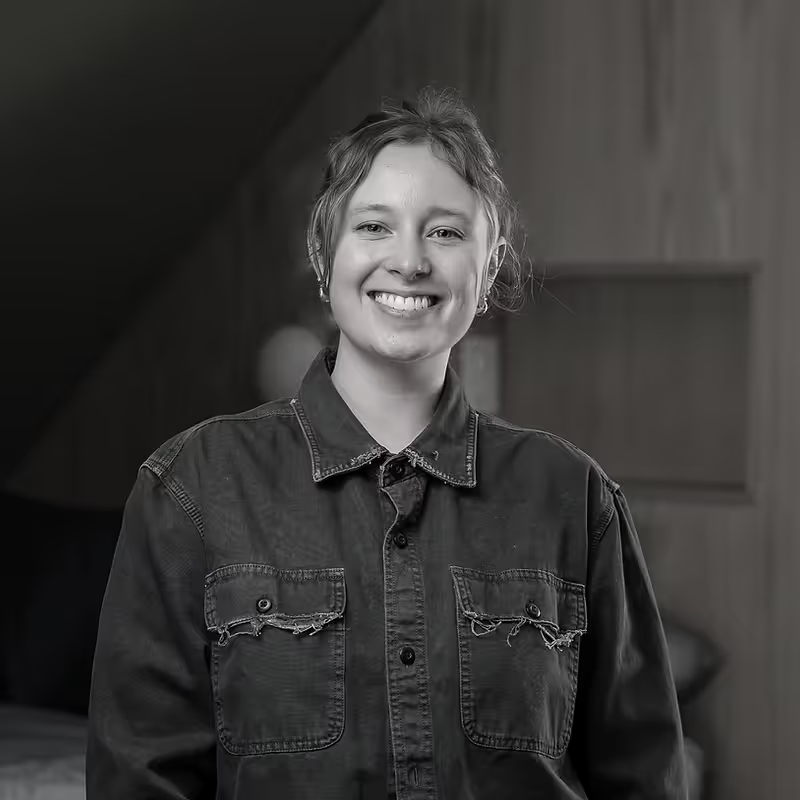
CEO & Principal Designer
Savannah Dodge is the Chief Executive Officer and Principal Designer of Curio Studio. She earned her BFA in Interior Design from the New England School of Art & Design at Suffolk University and brings over a decade of experience designing thoughtful, layered homes. Her work spans full-service residential projects, renovations, investment properties, and country homes throughout the Hudson Valley and New England. Originally from the Berkshires, Savannah maintains a deep connection to the cultural and natural landscape of the Northeast, along with a strong regional network of architects, craftspeople, and trades. She leads every stage of the design process, from initial concept and construction documentation to FF&E selection, procurement, and final installation.
At the heart of Savannah's work is the belief that great design restores the relationship between people, place, and planet. She approaches each project as a living ecosystem, considering how architecture, interiors, and landscape work together to shape the experience of home. Drawing on color theory, restoration, and principles of human ecology, she creates spaces that transform the energy of a home to support the people who live within it. For Savannah, sustainability is not a trend or aesthetic but a foundation for thoughtful, enduring design that allows a home to feel both deeply personal and connected to its surroundings.
Free download
A free guide: the eight questions worth asking, and what each answer tells you. Enter your email and we'll send it over.
Also serving
Rooted in the landscape. Designed for how you live here.
Where the landscape sets the brief.
The mountains, designed with intention.
Albany, Troy, Schenectady: designed for real life.
Mountain homes that earn their setting.
Pioneer Valley and beyond.
Vermont, Connecticut, Rhode Island, Maine: we travel for the right project.
Working on something in Saratoga Springs?